Kalinga: Feast of the Fallen - Q&A with Production’s Co-Directors
Show Dates: Oct 17 to Oct 30
Q&A with Co-Directors Bagu and Divya Maiya
Background
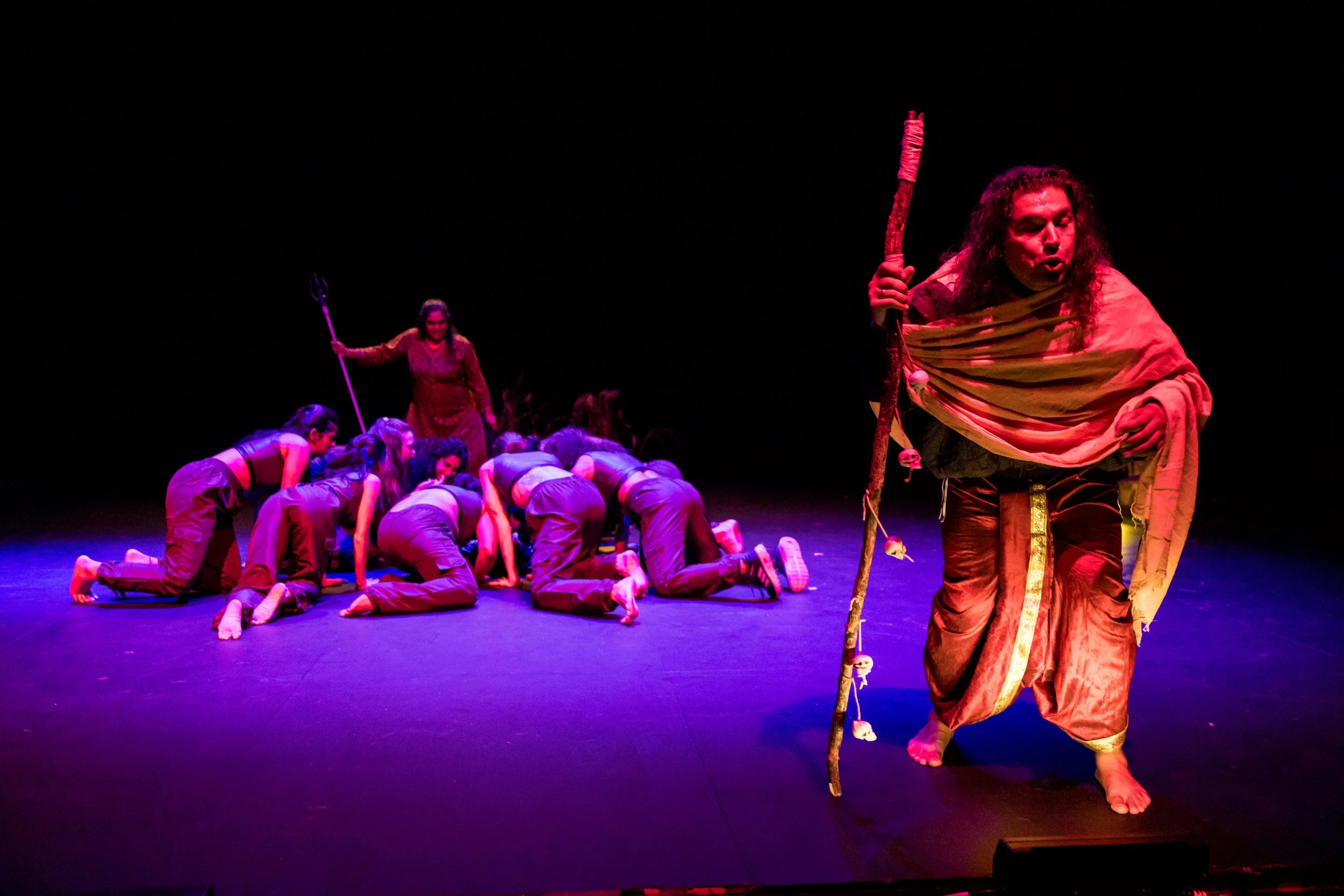
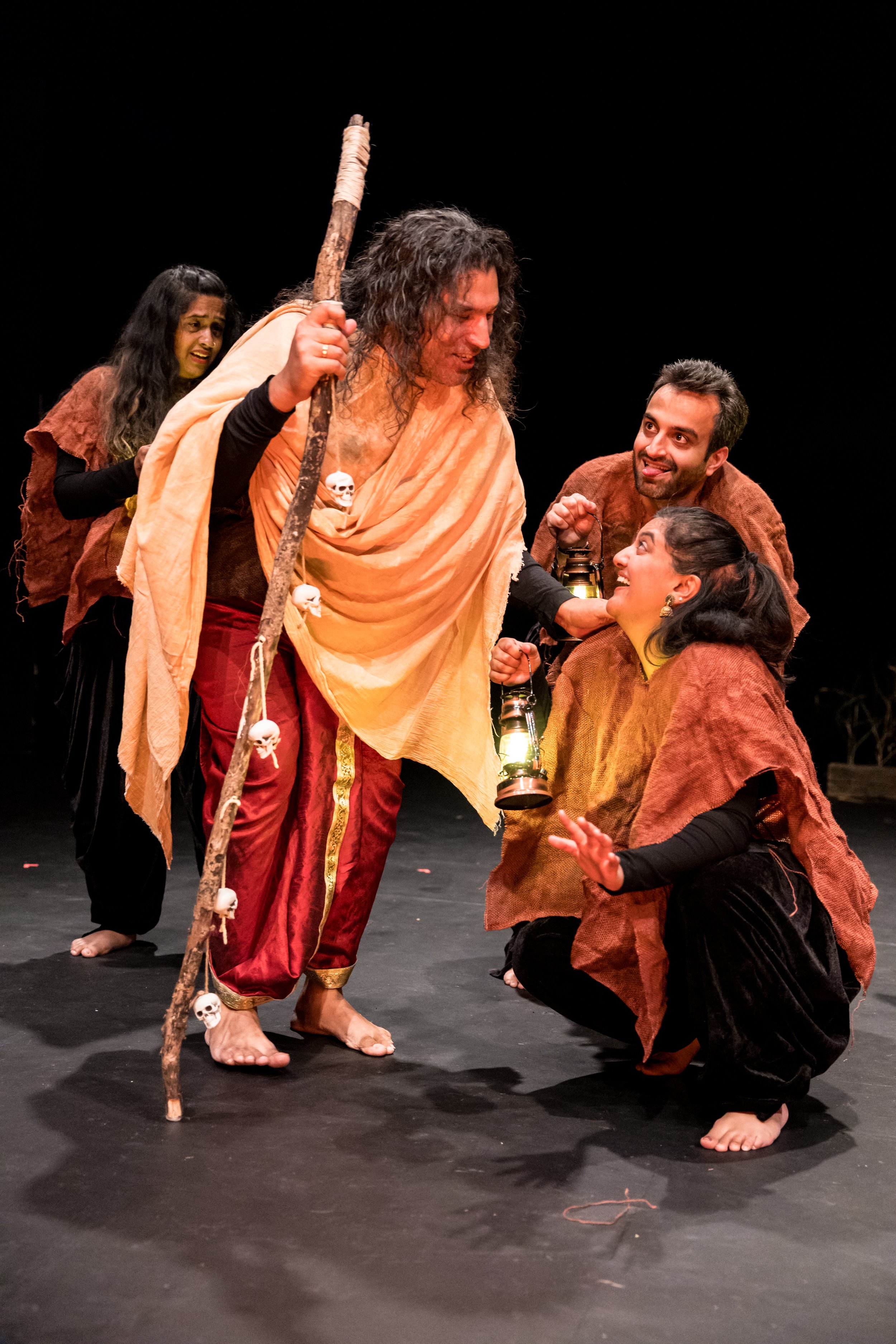
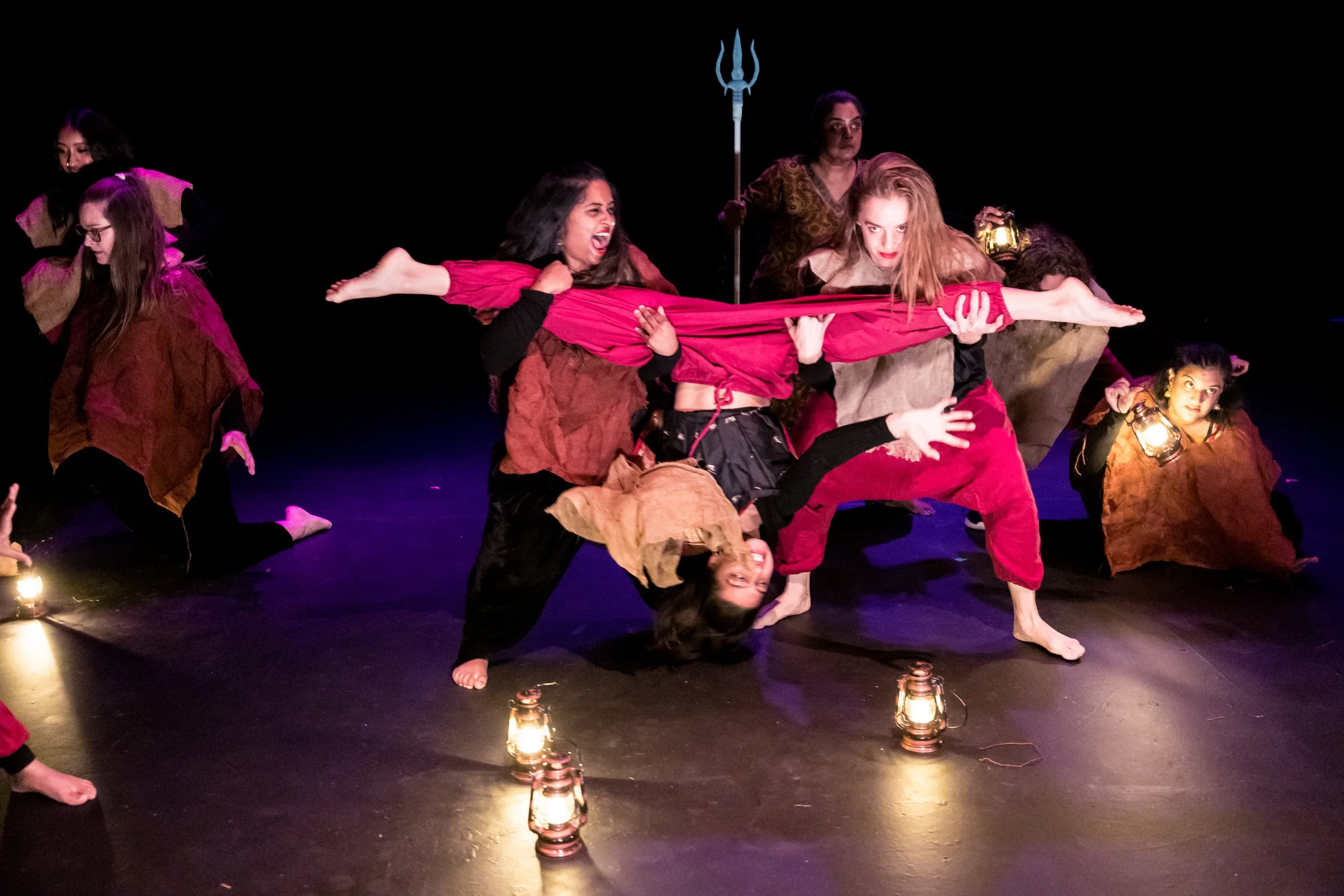
After the Chola army defeats Kalinga, Goddess Kali and her starving ghouls descend upon the battlefield and transform its horrors into a grotesque celebration. Bodies become decoration, weapons become tools, and the remnants of war become an elaborate feast. Through narration, movement, rhythm, dark humor and moments of Tamil language, the ghouls revel in victory - until the words used to describe an ancient conquest begin to sound unsettlingly familiar. With this Q&A, we get the inside scoop of the show from the production’s directors themselves.
Q) Why did you choose the 12th-century Tamil literary work Kalingathu Parani to be a source of inspiration for this production? Can you give a short synopsis for what the work is about for those who haven’t read the poem?
A) When we were considering applying to the Twin Cities Horror Festival, we knew we wanted to explore Indian mythology or classical Indian literature, particularly stories connected to war. There were two reasons for this. First, South Asian horror is significantly underrepresented in Western theater, and we wanted to bring that rich storytelling tradition to audiences here. Second, at SAATH, we've always believed that art should have social relevance. We wanted to create something that went beyond conventional horror and explored the very real horrors of war.
That's what drew us to Kalingathu Parani, a 12th-century Tamil war poem written by Jayamkondar. The poem celebrates the Chola dynasty's victory over the kingdom of Kalinga. It's an extraordinary literary work filled with vivid descriptions of battle, supernatural beings, Goddess Kali, and ghouls who feast on the aftermath of war.
What fascinated us was the contrast between the poem's celebration of military conquest and its grotesque descriptions of death and destruction. The supernatural elements are horrifying, but when you think about it, the actual horrors are what human beings inflict upon one another.
That contradiction became the foundation of our adaptation. We wanted to take a poem that glorifies victory and turn the perspective around. Instead of asking who won the war, we wanted to ask: Who paid the price for that victory?
And perhaps the most unsettling part is that, nearly 900 years later, we're still asking the same questions.
Q) How did you and co-director Divya Maiya collaborate to bring this vision to life?
A) Bagu, who comes from Tamil Nadu and has extensive experience in theater and film, brought a deep understanding of Tamil literature and storytelling traditions to the production. Their knowledge was instrumental in helping us interpret the original literary work and explore how we could adapt a nearly 900-year-old poem for contemporary theater.
Together with Divya, Bagu helped conceptualize the contemporary elements of the production, particularly how we could draw parallels between the wars and conquests described in the poem and the world we live in today. We wanted to explore how humanity's hunger for power, land, and dominance has remained largely unchanged across centuries.
The collaboration was about finding a balance between staying rooted in the original Tamil literary work and reimagining it in a way that resonates with today's audiences. Through satire, horror, movement, and theatrical storytelling, we worked to make an ancient story feel disturbingly relevant to the present.
Q) What role does choreography play in communicating emotions and ideas that might be difficult to express through dialogue alone?
A) Choreography is one of the most powerful storytelling elements in Kalinga. War is an intensely physical experience, and emotions like fear, hunger, violence, grief, and desperation can sometimes be communicated far more effectively through movement than through words.
Our choreographer, Anjali Gopal, brings her expertise in blending Bharatanatyam with modern and contemporary dance, creating a unique movement vocabulary for this production. Bharatanatyam is an incredibly rich and ancient Indian classical dance form, deeply rooted in storytelling, mythology, and expressive movement. Its long history and cultural roots make it a natural artistic choice for a production inspired by a 12th-century Tamil poem. It allows us to retain a connection to the cultural and historical world of the original literary work while reimagining it for contemporary audiences.
Bharatanatyam's intricate gestures, rhythmic precision, expressive storytelling, and grounded movements contrast beautifully with the fluidity, abstraction, and raw physicality of contemporary dance. This fusion creates a balance between the traditional and the modern, much like the production itself, which connects an ancient literary work to the realities of our world today.
What makes the choreography particularly interesting is the contrast between beauty and brutality. There are moments when the movement is visually captivating, almost celebratory, while what it represents is deeply disturbing. Anjali uses that contrast to bring out the absurdity and horror of war.
We wanted the audience to be mesmerized by the movement, but also feel uncomfortable about what they are witnessing. That tension between beauty and horror is central to how we tell this story.
Q) Is there a particular scene or moment in the production that feels especially meaningful to you?
A) One of our favorite moments in the production is inspired by a chapter in Kalingathu Parani that describes the ghouls bathing in a river of blood after the war.
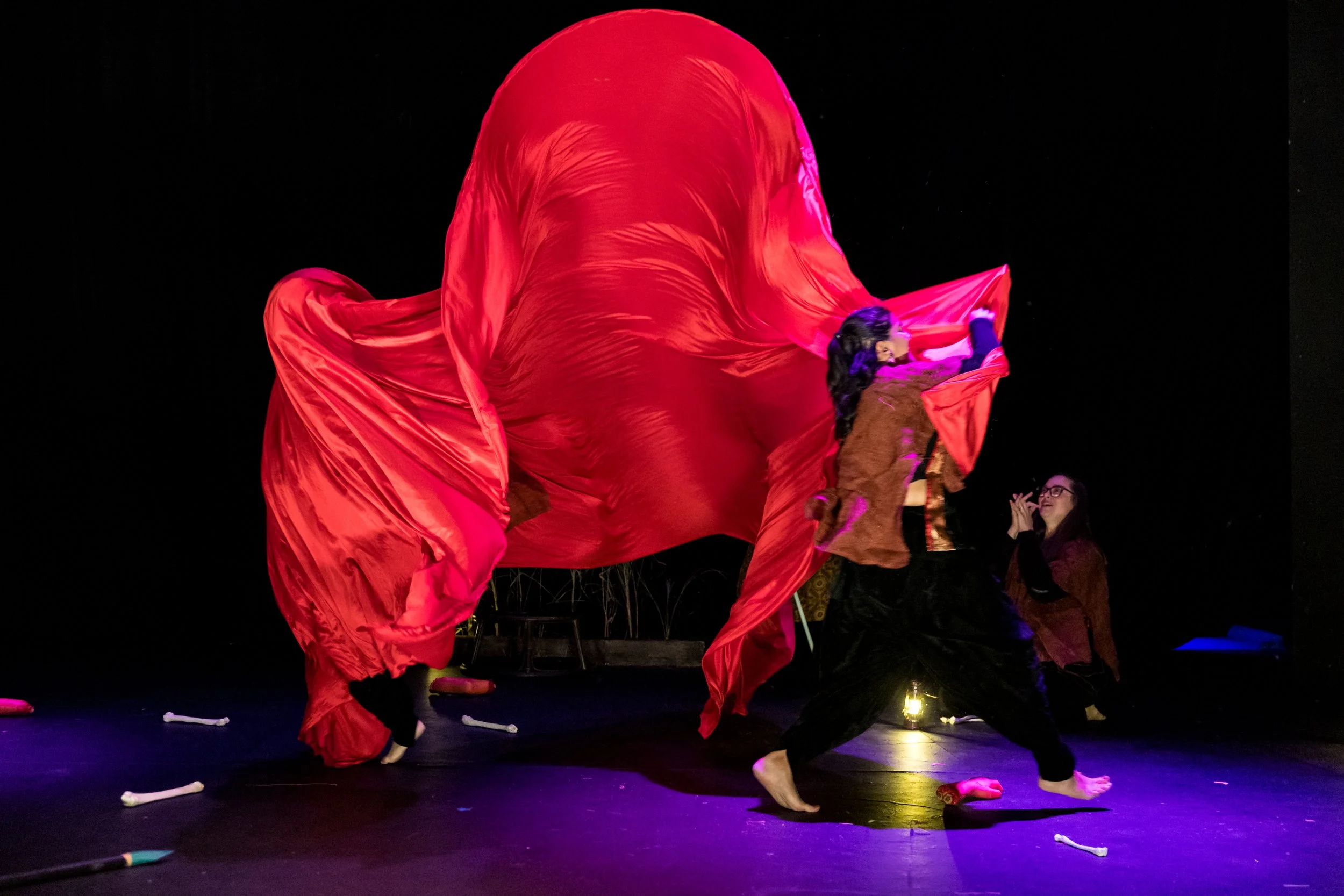
When we were conceptualizing this scene, we wanted to bring that gruesome imagery to life in a way that was visually beautiful, imaginative, and theatrical. We used a long piece of red fabric to represent the river of blood, and through contemporary choreography, physical movement, and ensemble storytelling, transformed something so simple into a living, flowing river.
What I particularly love about this scene is how the ghouls play, splash, and bathe in the river with such uninhibited joy. Something that should be absolutely horrifying becomes this almost playful, celebratory moment.
For us, this moment captures the essence of our production. We take something grotesque and transform it into something beautiful, without losing the horror underneath. It's that contradiction between joy and suffering, beauty and brutality, that makes the scene so powerful. And it demonstrates how movement and theatrical imagination can tell a story in ways that words alone simply cannot.
Q) What does the slaying of elephants represent in both the production and the poem?
A) In ancient Indian warfare, elephants were symbols of military strength, power, and prestige. The Parani genre of Tamil literature traditionally celebrates a warrior who has slain a thousand elephants in battle. In Kalingathu Parani, the killing of elephants is portrayed as an extraordinary military achievement, a testament to the victorious army's strength and dominance
Photo credit - Dan Norman Photography
Movement Director - Anjali Copal